HISTORICAL FILMMAKING
Making the past believable on screen
Do you want to become a historical filmmaker? Do you want to improve your filmmaking skills?
Where Do I Begin?
Start with a story you can research and a production you can actually finish. Historical filmmaking requires choices about the script, locations, performers, clothing, props, camera, sound, safety, continuity, editing, and what must stay outside the frame. The lessons below use Killed at Resaca as a practical example, with particular attention to young and beginning filmmakers.
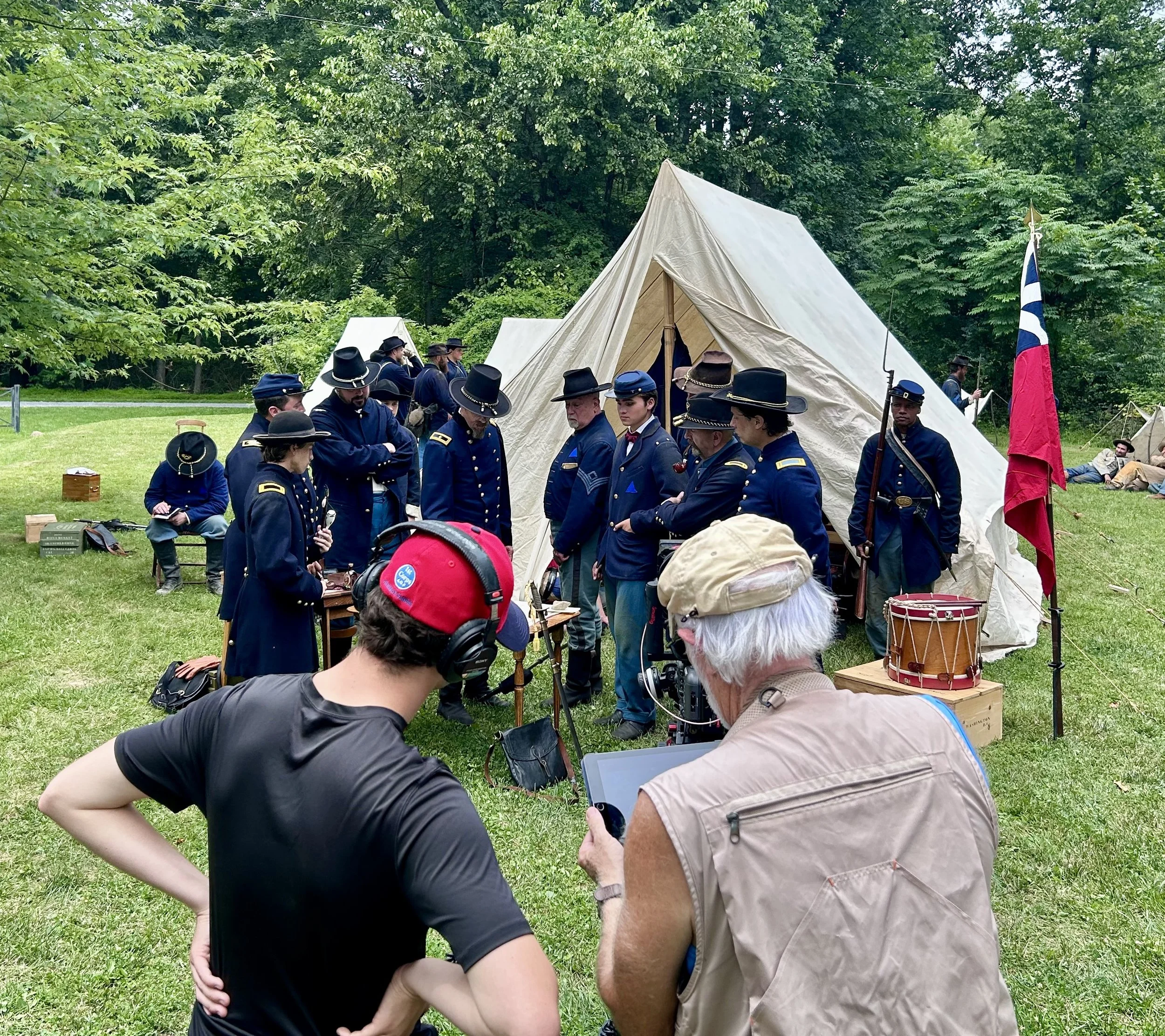
Two Purposes of Historical Filmmaking
Historical filmmaking requires two jobs at once: tell a compelling story and control the modern details that can break the illusion of another time. Killed at Resaca offers a practical case study in doing that work with a small independent production.
The process begins before a camera rolls. Filmmakers research the people, place, clothing, language, military behavior, and objects that belong in the scene. They choose locations carefully, decide what the camera may and may not see, and build a team that can solve historical, technical, and safety problems together.
What About Job Titles On A Smaller Production?
On a small production, job titles matter less than whether essential work gets done. Camera, sound, lighting, continuity, makeup, practical effects, transportation, food, releases, and safety all have to function at the same time. Experienced reenactors can save a production enormous amounts of training, wardrobe expense, and correction because they already know how soldiers dressed, moved, handled equipment, and responded to commands.
HISTORY BOY
Jacob Bates’s historical filmmaking before Killed at Resaca
Jacob has directed and edited historical films through History Boy Productions since 2017. Earlier work includes Into the Wilderness, All for the Union, and A Devilish Entanglement: Battle of the Wilderness. He has also worked with filmmaker Brad Graham at Historical Films Inc. and has interviewed Civil War film director Ron Maxwell.
Before filming
Define the story, period, and location. Research what belongs in the frame. Build the cast and crew. Use people who already know the period when possible. Plan wardrobe, props, sound, safety, transportation, food, releases, and the daily shooting schedule.
On the set
Film scenes in workable pieces, often out of story order. Watch backgrounds for modern objects. Protect continuity in clothing, makeup, props, position, and movement. Record clean sound when possible. Give camera, sound, effects, performers, and historical advisers room to solve the same scene together.
After “cut”
Editing is another stage of writing. Picture, sound, music, color, titles, credits, accessibility, and visual corrections turn separate takes into a continuous story. Post-production can solve some problems, but it cannot replace every missing shot or performance.
For beginning filmmakers.
Killed at Resaca on the Big Screen expands these subjects with practical discussions of directing, camera, sound, continuity, effects, locations, releases, transportation, food, post-production, and small-budget problem solving.