CIVIL WAR REENACTORS AND LIVING HISTORY
Reenactors were indispensable to Killed at Resaca
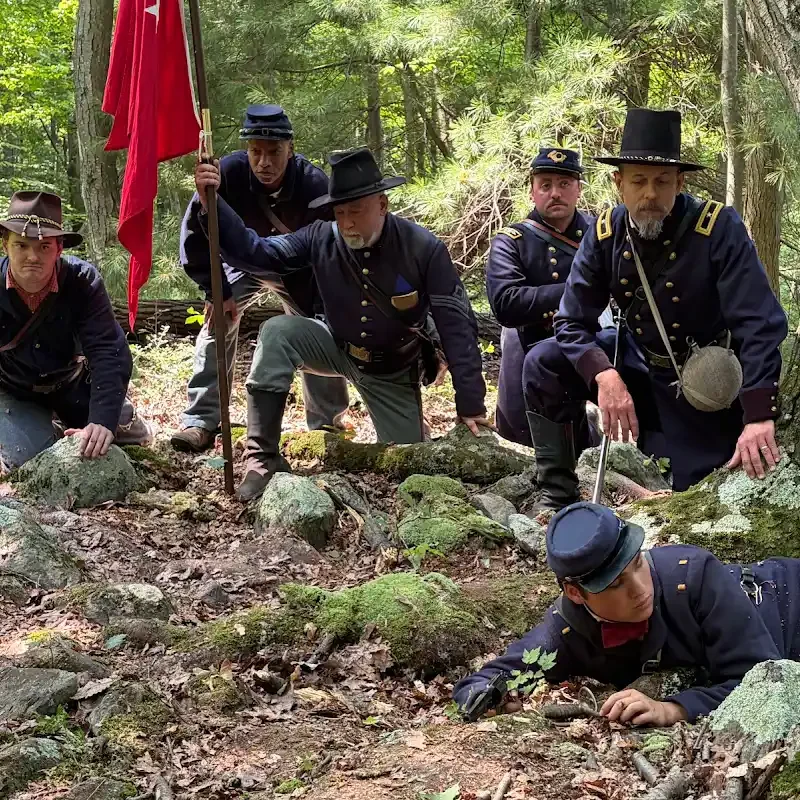
Most of the people who appeared as Civil War soldiers in Killed at Resaca were already active in Civil War reenacting. More than 90 percent of the actors, and many members of the crew, came from the reenacting community. They routinely travel to battlefields, historic sites, museums, and public events around the country to recreate military and civilian scenes from the 1860s, explain the period to visitors, and take part in living-history programs.
That experience made the production possible. Almost every military performer arrived with his or her own period clothing and gear — belts, canteens, haversacks, cartridge boxes, reproduction weapons, and other equipment needed for the role. Many brought extra pieces to lend. The production therefore did not have to buy or rent a complete military wardrobe and full set of field equipment for the cast.
Just as important, the reenactors already knew how Civil War soldiers stood, marched, saluted, carried muskets, formed lines, knelt, sat, responded to commands, and moved through wooded ground. They took the work seriously. Many had spent years studying the Civil War and regularly traveling to reenactments, battlefield programs, encampments, and other living-history events around the country.
Want to become a reenactor?
If Civil War reenacting interests you, begin with people before purchases.
Visit an event, meet several units, learn their safety rules, borrow gear when possible, and decide what kind of soldier or civilian you want to portray before buying a full kit.
Killed at Resaca on the Big Screen includes a step-by-step beginner guide in Appendix VII: “Civil War Reenacting — What It Is, Why People Do It, and How to Get Started.”
How reenactors prepare
A serious reenactor first decides what specific soldier or civilian he or she wants to portray — for example, Union or Confederate, infantry or another branch, private or officer, a particular regiment, and a particular year or campaign. The reenactor then studies period photographs, letters and diaries, drill manuals, quartermaster records, surviving clothing and equipment, museum collections, archaeology, regimental histories, and modern scholarship. A goal is to understand the person being portrayed well enough to explain the choices in clothing, equipment, movement, and behavior.
They taught the newcomers
Experienced reenactors showed newcomers how to wear belts and shoulder straps, position canteens and haversacks, stand at attention, salute, walk in formation, carry a musket, sit, kneel, and respond to rank. They lent clothing and equipment. They corrected mistakes quickly and explained why details mattered. In many cases, a newcomer could learn in a few minutes what the reenactor had learned through years of events, research, and practice.
Rehearsal began before the cameras arrived
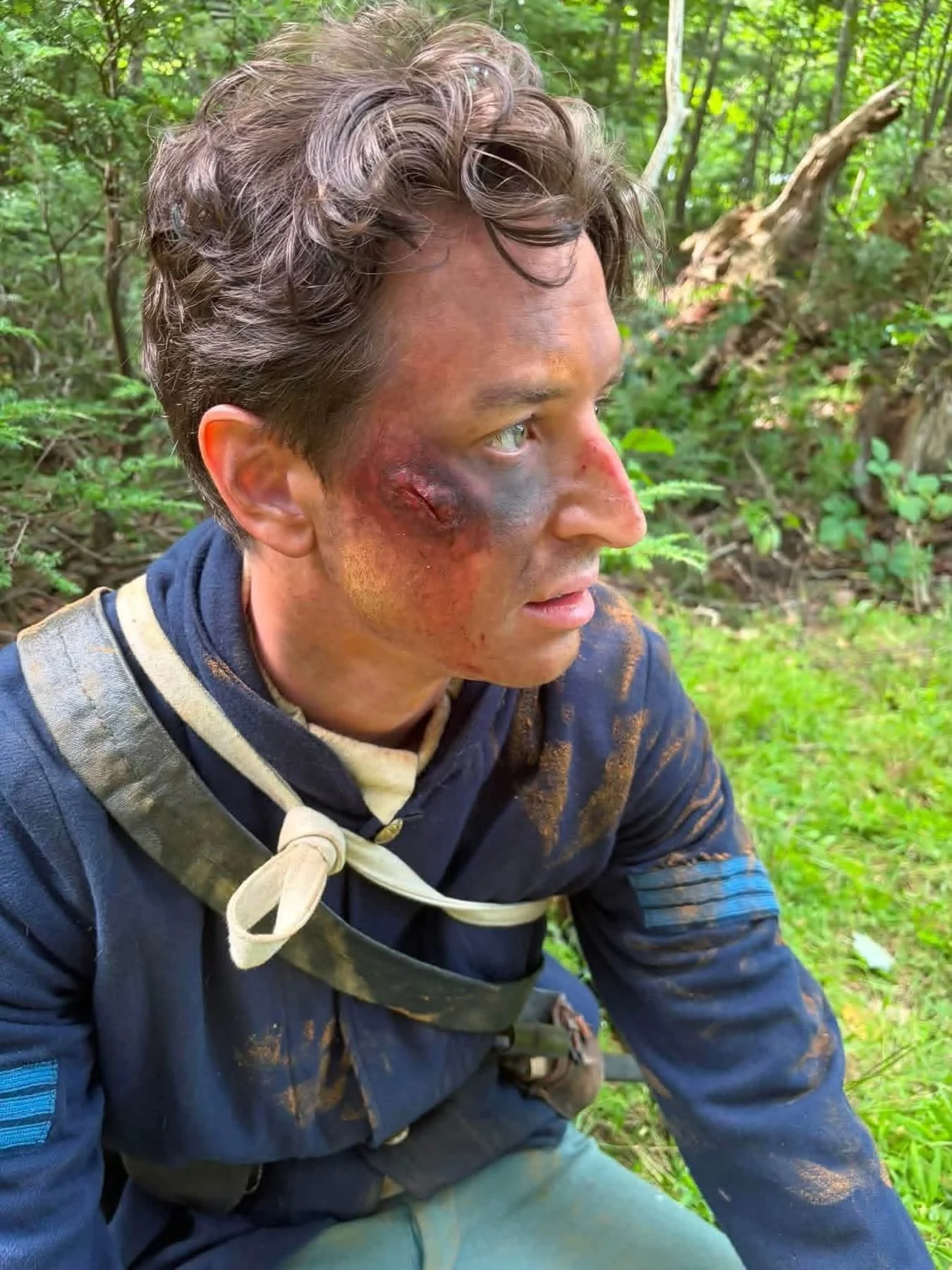
Reenacting experience also helped performers become comfortable in their roles before filming. Scott “Scoot” Avellino Jr. and Jacob L. T. Bates rehearsed while wearing their period clothing and walking around Gettysburg during the days before filming. The clothing, posture, equipment, and movement became part of rehearsal rather than something added at the last moment.
FARB: a reenactor warning about visible mistakes
Reenactors use the word FARB for something that is conspicuously wrong for the historical period. The exact origin of the term is disputed. On a film set, the idea is useful because a camera can preserve a modern wristwatch, plastic bottle, incorrect piece of clothing, modern gesture, or badly placed item that a viewer might otherwise overlook. Reenactors helped spot those problems before they became part of a finished shot.
A larger Civil War film tradition
Director Ron Maxwell has described the importance of reenactors to Gettysburg. Thousands came with their own uniforms, weapons, flags, horses, artillery, and experience. Killed at Resaca worked on a far smaller scale, but it benefited from the same basic advantage: experienced reenactors could arrive ready to portray Civil War military life rather than learn it from scratch.